If you think Brookhaven is just one kind of housing market, think again. This city packs a surprising range of home styles into just over 12 square miles, from early 20th-century homes and midcentury ranch pockets to newer townhomes, condos, and mixed-use areas near transit and shopping. If you are trying to decide where you fit in Brookhaven, this snapshot will help you understand the city’s housing mix, what makes each pocket feel different, and how to narrow your search with more confidence. Let’s dive in.
Brookhaven offers more than one housing story
Brookhaven sits immediately northeast of Atlanta and blends residential streets with walkable village-style areas, a MARTA station, and a mix of suburban and urban conveniences. The city had an estimated 2024 population of 59,370, and the median value of owner-occupied housing units was $660,300 based on 2019 to 2023 Census QuickFacts.
What stands out most is variety. Brookhaven’s housing stock includes detached homes, attached homes, smaller multifamily buildings, and larger apartment-style buildings, which makes it a flexible market for buyers looking at different price points and lifestyles.
According to the city’s 2021 to 2025 Consolidated Plan, 41.6% of Brookhaven’s housing stock is 1-unit detached homes. Another 9.5% is 1-unit attached homes, while 18.9% is in 5 to 19 unit buildings and 24.8% is in 20-or-more-unit buildings.
That mix matters because it gives you options. If you want an established single-family street, Brookhaven has that. If you want a lower-maintenance townhome or condo near more activity, Brookhaven has that too.
Older homes shape Brookhaven’s identity
One of Brookhaven’s biggest draws is that its older housing stock does not all look the same. Instead, the city has layers of architectural history that create very different experiences depending on where you look.
The city reports that 36.5% of its housing stock was built before 1979. At the same time, 11.7% was built since 2010, so Brookhaven is not frozen in time. It is a place where older homes and newer construction often exist side by side.
Historic Brookhaven brings early character
Historic Brookhaven is one of the clearest examples of the city’s early housing identity. The National Register nomination describes it as a planned early 20th-century golf-course and country-club suburb, with homes developed from 1910 to 1941.
Architectural styles in the area include Colonial, Georgian, and Tudor Revival, along with homes influenced by Craftsman, Dutch Colonial Revival, Spanish Revival, and Minimal Traditional design. For buyers, that means this pocket offers a more architectural, legacy-home feel than many newer intown options.
It is also helpful to know that postwar houses outside the district often read very differently. So if you like the broader Brookhaven location but want a different style or scale, nearby areas may offer that contrast.
Ashford Park and Drew Valley reflect midcentury roots
Ashford Park, Drew Valley, and Skyland Park tell another important part of the Brookhaven story. The city’s character-area plan says these neighborhoods developed in the 1940s and 1950s and historically featured smaller homes on larger lots.
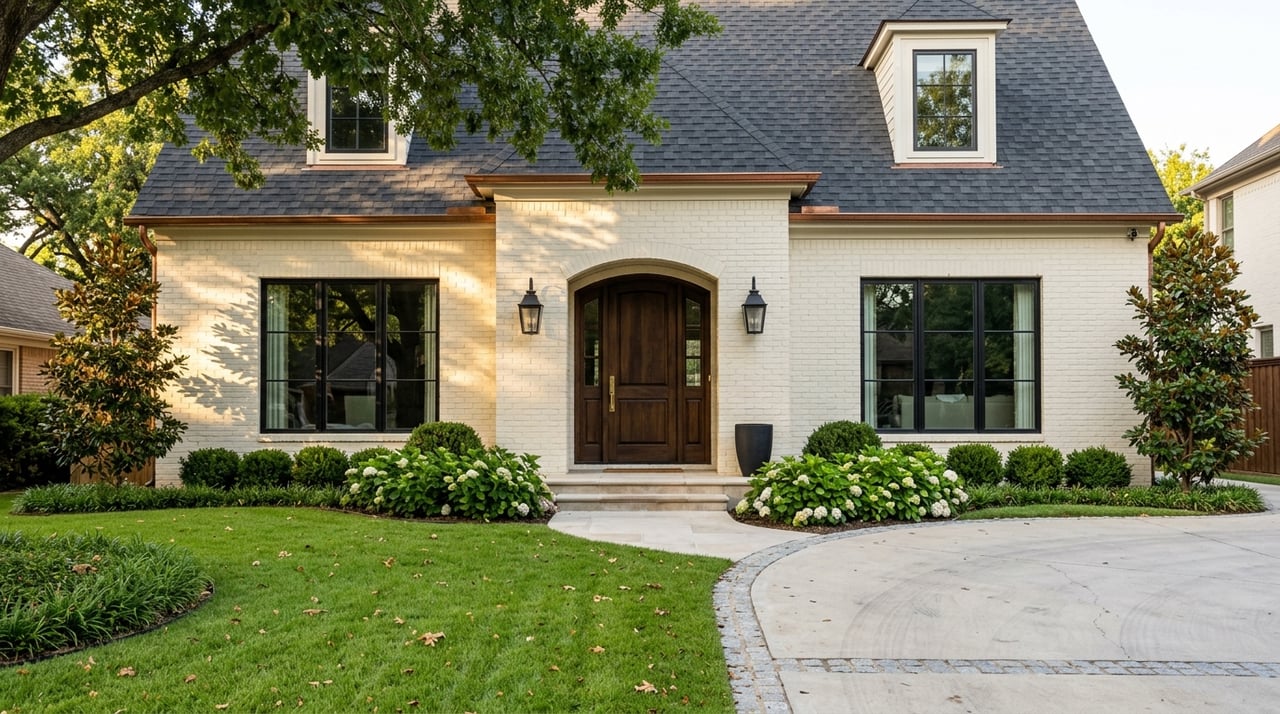
Ashford Park was established in 1944 and historically consisted of ranch homes on large lots. Over the past decade, the city says these neighborhoods have seen significant infill, often with much larger replacement homes.
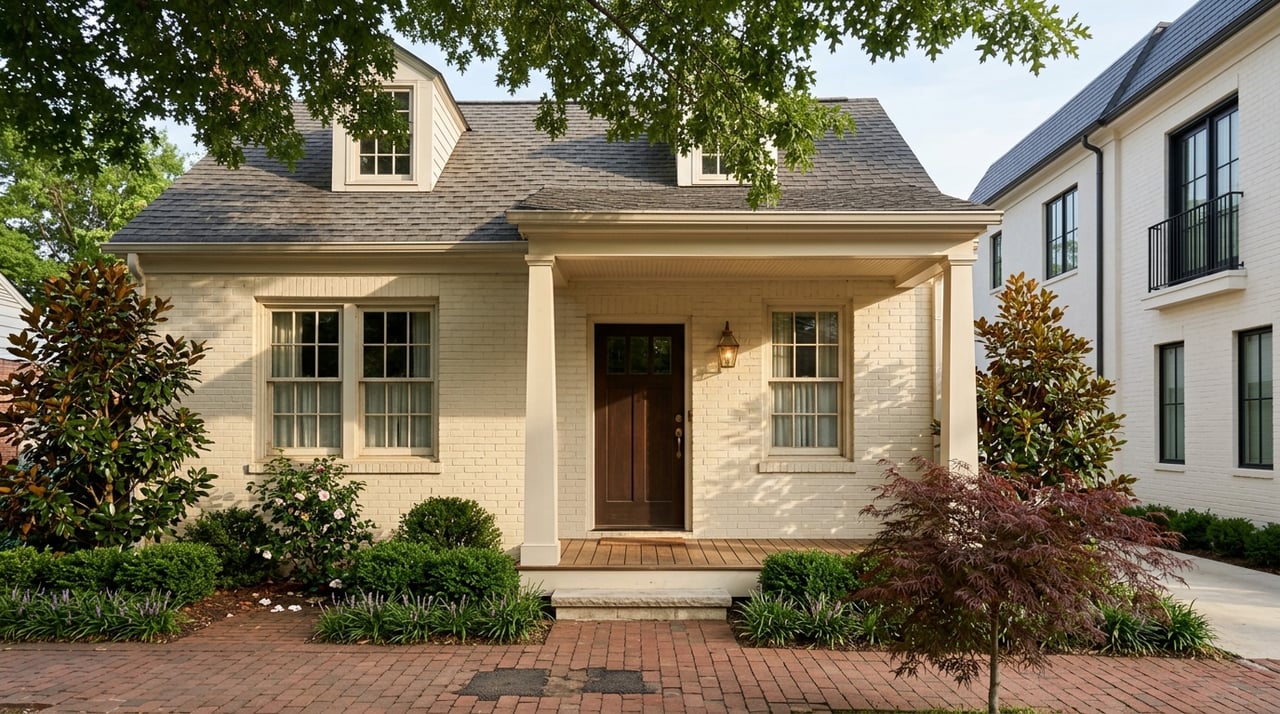
That creates an interesting mix for today’s buyers. On the same general stretch, you may find original ranch homes, updated cottages, newer construction, and rebuilds with a different footprint and style.
Lynwood Park adds historic context
Lynwood Park is another meaningful part of Brookhaven’s housing landscape. The city says it was established in the early 1930s and was the first predominantly Black subdivision in DeKalb County.
Brookhaven approved its historic designation in 2020. More recently, planning around the Windsor-Osborne area has focused on neighborhood-scale commercial uses, sidewalks, parking, and placemaking near the neighborhood’s main intersection.
For buyers, Lynwood Park is a reminder that Brookhaven’s identity is not only about architecture. It is also about the history and evolution of distinct community areas within the city.
Townhomes and newer housing are growing
If your ideal home is newer, lower-maintenance, or closer to mixed-use activity, Brookhaven has several areas worth watching. The city’s planning direction points toward more missing-middle and gentle-density housing, including townhomes, duplexes, triplexes, and similar formats.
That does not mean every part of Brookhaven is changing at the same pace. Instead, newer and denser housing is generally concentrated in key nodes and corridors rather than spread evenly across the city.
City Centre is a major growth node
The Brookhaven City Centre area around the Brookhaven-Oglethorpe MARTA station is one of the clearest examples. The City Centre Master Plan, adopted in 2022, is intended to guide development around the station and create connected nodes with multi-use paths and pedestrian crossings.
The city also places the future civic center directly adjacent to the station. For buyers who value transit access, walkability, and a more connected urban feel, this area represents an important part of Brookhaven’s next chapter.
Lenox Park shows Brookhaven’s mixed-product side
Lenox Park is a useful example of attached and multifamily housing in Brookhaven. The city describes it as a neighborhood with single-family and multifamily homes as well as commercial buildings, all developed on 164 wooded acres.
The surrounding area also includes higher-end home, apartment, and condo communities. If you want Brookhaven access with a broader mix of housing types, Lenox Park helps illustrate what that can look like.
Corridors may bring more housing options
The city’s 2044 housing memo identifies several places where denser housing is more likely through redevelopment. These include Brookhaven City Centre, Peachtree Road, the Blackburn Park commercial center, and underdeveloped parcels around I-85.
The memo also says the Buford Highway corridor, which includes aging apartment complexes, is the city’s largest opportunity for new housing development and redevelopment. In practical terms, this suggests Brookhaven may continue adding more modern and more varied housing choices over time.
Brookhaven is a bridge market
Brookhaven works well for many buyers because it sits between two experiences. It has enough older neighborhoods and detached homes to feel residential and established, but it also has enough planning momentum around townhomes, mixed-use areas, and transit-oriented growth to feel more urban than many classic North Atlanta suburban markets.
That makes Brookhaven easier to personalize. You can search for charm, lot size, lower maintenance, newer construction, or convenience without leaving the city altogether.
Different pockets support different priorities
If you are drawn to old-house charm and early architecture, Historic Brookhaven may be the best fit. If you prefer ranch neighborhoods, larger lots, or the possibility of newer infill among older homes, Ashford Park and Drew Valley may make more sense.
If you want attached housing or a more mixed-use setting, areas near City Centre, Lenox Park, and redevelopment corridors may deserve a closer look. If local history and neighborhood identity matter to you, Lynwood Park brings a distinct context.
This is why broad advice about Brookhaven can fall short. The better question is not just whether Brookhaven fits you, but which part of Brookhaven best matches how you want to live.
A quick look at pricing by product type
If you want a shorthand view of Brookhaven’s price structure, the city’s housing memo cites a 2021 market analysis with historical median sale prices from 2018 to 2020. During that period, median sale prices were $565,000 for single-family detached homes, $475,000 for townhomes, and $229,650 for condominiums.
These are not current prices, and they should not be treated as today’s market value. Still, they help show Brookhaven’s general product hierarchy and why the city can appeal to both move-up buyers and buyers looking for a lower-entry attached option.
For sellers, that same variety matters too. Positioning a condo, townhome, cottage, ranch, or larger replacement home in Brookhaven requires a strategy that reflects the specific submarket and the buyer pool most likely to respond.
What buyers and sellers should watch
Brookhaven’s planning direction suggests the city will keep widening its housing mix rather than narrowing it. The 2026 Adopted Budget lists active work related to duplex and triplex design standards, accessory dwelling unit support, a missing-middle guidebook, and ongoing planning connected to Windsor-Osborne and Buford Highway.
For buyers, that means future inventory may continue to diversify in certain areas. For sellers, it means understanding how your home fits into Brookhaven’s evolving housing story can help you position it more effectively.
The biggest takeaway is simple: Brookhaven is not one market. It is a layered city where style, age, density, and location all shape value and lifestyle in different ways.
If you are weighing Brookhaven against other intown or North Atlanta areas, a neighborhood-by-neighborhood approach will usually give you a much clearer answer than looking at citywide averages alone. And if you are preparing to sell, the same local nuance can make a real difference in pricing, presentation, and timing.
When you want a calm, facts-based read on where your home or home search fits in Brookhaven, Allise Raad is here to help.
FAQs
What types of homes are available in Brookhaven?
- Brookhaven includes detached single-family homes, attached homes, condos, townhomes, smaller multifamily buildings, and larger apartment-style buildings, giving you a wide range of housing choices.
Which Brookhaven areas are known for older homes?
- Historic Brookhaven is known for early 20th-century architecture, while Ashford Park, Drew Valley, and Skyland Park are known for midcentury roots and a mix of older homes and newer infill.
Where can you find townhomes and newer housing in Brookhaven?
- Buyers often look toward Brookhaven City Centre, Lenox Park, and redevelopment corridors such as areas along Peachtree Road, around I-85, and near Buford Highway for newer and denser housing options.
Is Brookhaven mostly single-family homes?
- No. While single-family detached homes are the largest category at 41.6% of the housing stock, Brookhaven also has a meaningful share of attached and multifamily housing.
How does Brookhaven compare to nearby Atlanta-area neighborhoods?
- Brookhaven often feels like a bridge market because it combines established residential streets and older homes with a growing mix of townhomes, condos, transit-oriented planning, and mixed-use nodes.
Why does Brookhaven appeal to both buyers and sellers?
- Brookhaven appeals to buyers because it offers multiple home types and lifestyle options within one city, and it appeals to sellers because different property types can attract distinct buyer pools when marketed with the right local strategy.